
When will Belarus be fully self-sufficient in 'winter' tomatoes? Government sets date
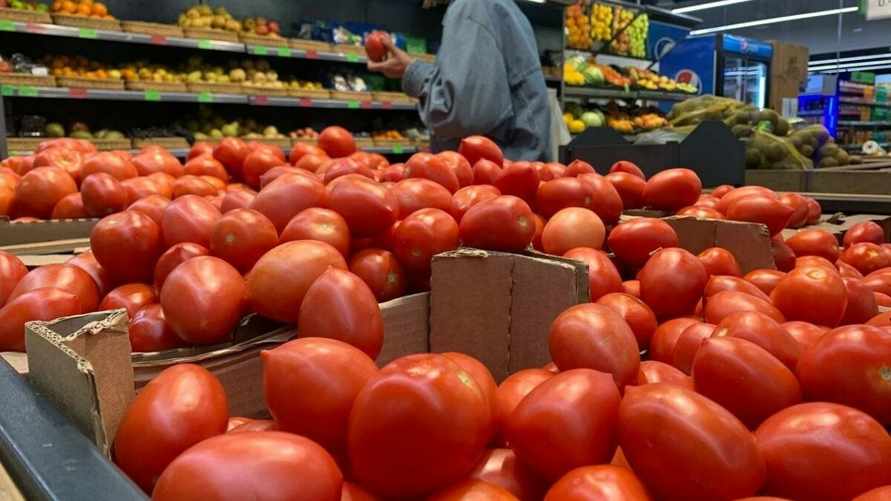
The government has announced a precise timeline for when Belarus will become entirely self-sufficient in domestic tomato production, including during the off-season. The new planned targets for Belarusian farmers were outlined on 27 November by Deputy Prime Minister Yury Shuleiko.
Shuleiko presented the new deadlines in a thematic report to deputies of the House of Representatives and members of the Council of the Republic.
The deputy prime minister reported that Belarusian farmers have already managed to meet the domestic market’s demand for fresh cucumbers entirely, but there is still a shortfall in tomato production. This is most acutely felt during the off-season.
According to data from the Belarusian Ministry of Agriculture and Food, in 2023, domestic producers met only 37% of the Belarusian population’s demand for fresh tomatoes in winter. Earlier this year, the ministry pledged to increase this figure to 86% by 2027.
However, Shuleiko’s report painted an even more optimistic outlook. He forecasts that Belarus’s demand for tomatoes during the 2027/2028 off-season will be fully met, with the figure reaching 118% (up to 20.3 thousand tonnes). To achieve this, Belarusian farmers will need to increase production volumes in greenhouse facilities. According to Shuleiko, plans are also in place to double the production of leafy greens by this deadline.
Leafy greens include dill, lettuce, spinach, parsley, sorrel, rocket, spring onions, and basil – essentially all those vegetable plants cultivated for their edible green leaves and shoots. Belarusian farmers are also tasked with increasing production in fruit growing in the coming years. The area of young orchards was expanded this year by approximately one thousand hectares. According to government calculations, this will allow for an increase in the production volume of fruit and berries to 265 thousand tonnes by 2030. By this deadline, new and modernised old fruit storage facilities are expected to be established in Belarusian agricultural organisations.
According to official statistics, large-scale commercial production still forms the backbone of Belarusian agriculture, accounting for up to 79% of gross output. Approximately 18% of produce comes from the personal subsidiary plots of Belarusian citizens, and a mere 3% is produced by private (peasant) farms. Previously, Telegraf.news explained why Belarusian products are not always cheaper than imported ones. The Belarusian Ministry of Agriculture and Food attributed the price difference to the peculiarities of the climate.