
Belarus Ties University Funding to Labor Market Needs: Top In-Demand Professions for Next 5 Years
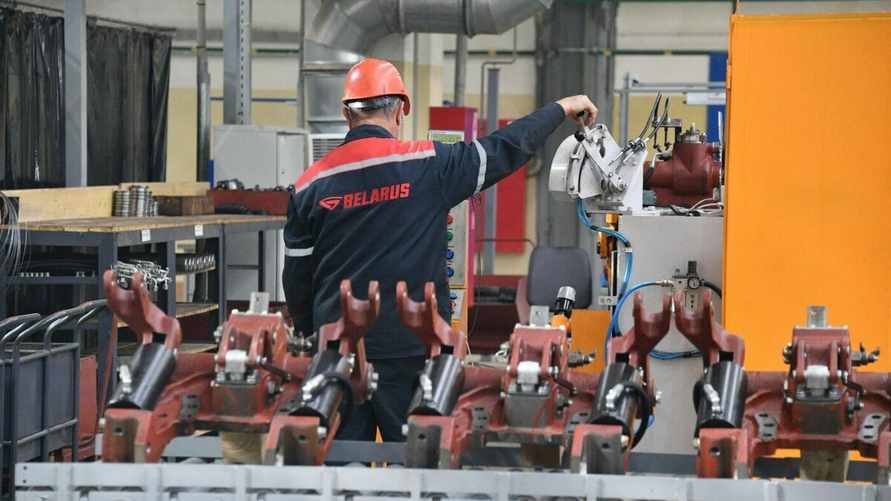
The Belarusian Ministry of Labor has named the country’s most in-demand professions for the next five years. Will university budget-funded spots now be allocated via state order?
Belarusian universities and colleges will now be required to set the number of state-funded (budget) spots for applicants based on a forecast of the economy’s workforce needs, prepared by the Ministry of Labor and Social Protection. The corresponding government decree came into force on November 29.
The authors of the document explained the innovation as a desire to more tightly link specialist training to labor market demands. Officials believe this approach will make graduates more employable and public spending on education more efficient.
How Will the New System Work?
The Council of Ministers has tasked the Ministry of Labor with developing two key reports: a balance of labor resources and a forecast of the economy’s need for various personnel. The latter, as assured by the Ministry of Labor, will be formed «from the bottom up.» This means officials will conduct selective surveys of thousands of employers across the country. In 2025, such a forecast for future years has already been made, based on data from 4.2 thousand organizations employing a total of 780 thousand people.
The ministry did not specify why it, and not the state statistics committee Belstat, was tasked with preparing these documents. However, it is known that the forecast will consider not only companies’ plans for creating new jobs but also the acute demographic problem—the need to replace retirees and pre-retirement age employees.
According to the Ministry of Labor’s statement, in Belarus, already one in five workers is either a pensioner or has reached pre-retirement age. The most «aged» sectors are manufacturing, education, healthcare, and social services.
Thus, the forecasts formed by the Ministry of Labor should become the basis for the Ministry of Education and educational institutions when planning «enrollment control figures»—the number of budget spots for specific specialties in colleges and universities.
What Are the Most In-Demand Specialties?
The Ministry of Labor did not delay and revealed which specialties it considers the most in-demand in Belarus for the next five years:
-
Manufacturing: There is increased demand for skilled workers—machine tool operators, adjusters, fitters, electricians, primarily with vocational education.
-
Construction: Demand will remain for concrete workers, bricklayers, and welders.
-
IT Sector: Developers and programmers are needed, not only for IT companies but also for the digitalization of traditional industries. The time is near when farms will seek not only milking machine operators but also computer specialists. And if someone can combine both skills, they will be invaluable.
-
Healthcare: An aging population creates sustained demand for doctors and, especially, care specialists.
-
Technological Development: The economy needs engineers of various profiles—from industrial to construction.
-
Education: There is a shortage of preschool teachers and school teachers.
-
Catering and Retail: It’s simple here—more salespeople and cooks are needed.
Officials believe that such a state-ordered system for personnel could make vocational education more pragmatic and reduce labor market imbalances. Consequently, as early as next year, the number of budget spots across different specialties could be significantly adjusted. But for that, we must await comment from the Ministry of Education.
Previously, Telegraf.news reported that Belstat stated the Belarusian labor market is showing unprecedented results: the unemployment rate continues to decline and has updated a historical record. The Eurasian Development Bank (EADB) named the reasons for this. We also looked at how Belarusians tried one method of job searching and then almost abandoned it.
Безработица в Беларуси упала до рекордного минимума. В ЕАБР назвали неочевидную причину