
Belarusians Allowed to Receive Salaries in Cryptocurrency. What Else Is in the New Decree on Crypto-Banks?
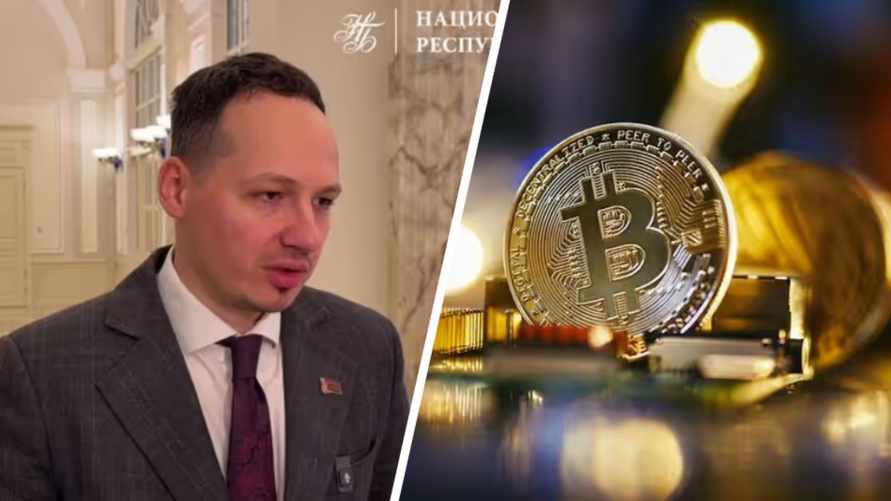
Belarusian President Alexander Lukashenko has signed Decree No. 19 “On Crypto-Banks and Certain Issues of Control in the Sphere of Digital Tokens.” Among other things, the document permits certain Belarusians to receive their salaries in cryptocurrencies. Details of the legislative innovations were disclosed on 16 January by First Deputy Chairman of the National Bank’s Board, Alexander Yegorov.
The Presidential Administration stated that the aim of the new decree is to strengthen the country’s image as a «flagship in financial IT technologies.» To this end, plans are in place to create domestic crypto-banks. According to Yegorov, the first such crypto-bank could launch within six months—once the current legislation is fully aligned with the new decree.
«In parallel, we will work with all potential investors, both domestic and foreign, so that practically immediately after all the legislation is prepared, we can see the first crypto-bank in our country,» explained Yegorov, stating that various countries have already shown interest in this.
According to the text of the presidential decree, a crypto-bank will be recognised as a joint-stock company that combines work with digital tokens with classical banking, payment, and other related financial operations. To enter the Belarusian market, a crypto-bank will need to obtain residency status in the High-Tech Park and be entered into the corresponding register of crypto-banks maintained by the National Bank.
In essence, the activities of crypto-banks will be regulated from two sides—they will be obliged to comply with decisions of the High-Tech Park’s Supervisory Council and operate under laws prescribed by the National Bank for non-bank credit and financial organisations.
What will change for ordinary Belarusians?
Yegorov called the new decree on crypto-banks «one of the most anticipated regulatory acts» for the Belarusian fintech community and a «unique case» for the global cryptocurrency market as a whole. The document, he said, opens up new opportunities not only for businesses but also for ordinary Belarusians.
In particular, as the National Bank representative explained, self-employed Belarusians will now have the opportunity to receive their salaries in cryptocurrency through the new crypto-banks. At the same time, according to Yegorov, the National Bank will establish clear requirements for safeguarding citizens’ funds. The National Bank will ensure that a person whose funds are held in a crypto-bank can access them at any time if necessary.
Yegorov stated that the emergence of crypto-banks in Belarus will elevate crypto to the status of a «full-fledged currency,» which can be used on par with ordinary, fiat money. Specifically, Belarusians will be able to issue cards linked exclusively to their crypto accounts.
In the view of the National Bank, the new decree will provide an impetus for foreign direct investment into the country’s economy and give additional momentum to the development of the IT sector.
«New lines of work will emerge, along with highly qualified specialists. This also means wages, it means growth in the population’s income. Therefore, the overall effect of the decree will be felt both in terms of market development and in terms of its impact on the entire economy,» stated Yegorov.
Recall that at the end of last year, Belarusian Finance Minister Yury Seliverstov responded to a question from MP Shpakouski, who asked for comment on the situation with a «segment of citizens» in Belarus who own cryptocurrency. In the MP’s view, this «segment» is quite noticeable and its profitability is «rather high.» For them, Seliverstov promised a «whole set of regulatory measures» this year.
Минфин пообещал новые меры для одной «прослойки граждан» Беларуси, чтобы «бюджет не страдал»